The Outline Of History by H.G. Wells
a book report of sorts
It might seem odd to include a story about history under the umbrella of politics. But it is often said that history is not a record of what happened but rather what historians, (a) thought to have happened, (b) were told by others had happened, (c) think might have happened, or worst of all (d) wish had happened. It is impossible for those recording “history” to leave out their own thoughts and feelings, so the inevitable discrepancies, primarily motivated by political bias, should be no surprise.
The writings of four historians, one each from Japan, Germany, Great Britain, and the USA, recording the events of the 1930s, leading up to WWII would probably not be recognizable as pointing to the same time period. Aside from differences of actual misunderstandings, the bulk of the differences would likely be rooted in the personal biases of the writers. The only way a reader could possibly figure out what actually happened would be to read each of the four accounts and try to interpolate between them. To make things worse, even the most dedicated student is inevitably misled by his or her own personal biases in the process of filtering out the biases of the authors.
I still feel cheated that it was not until I began to travel in Asia in the 1970s and Central America in the late 1990s, that I began to understand the importance of those centuries-old cultures. My schooling had me believe that every important event in history happened in Europe. I was lucky to have later found opportunities to overcome the narrow Eurocentric view that I grew up with.
Most of my generation can see the distortions in modern textbooks. They reek of political correctness of a kind that demonstrates a total lack of understanding of how this country came to be what it is today – its good and its bad. A civilization lacking an understanding of its past is doomed to repeat its mistakes and miss the opportunity to learn from its successes. When people don’t understand history, they fall victim to complacency, feelings of entitlement, and intellectual laziness. When a citizenry loses sight of its own history, the end is near. Let me hasten to add that not all of the purposeful distortions come from the political Left. While it is true that textbooks are chosen by professors, being mostly “Lib-ralls”, are more practiced at it, both sides need to share the blame for misleading our youth.
H.G. Wells’ The Outline Of History, initially written in 1920, is a literal outline. It was written at a time when distortions being leaked into “history” were far less common. Even his summary of Earth’s early history is surprisingly accurate, given the scientific advances of past decades. It is of course, very Eurocentric in its treatment of the most recent half-dozen centuries, but it is refreshingly missing the political distortion of history books published in more recent times. It can be thought of as a time-saving shortcut around the need to read two distorted accounts of the same historical event in order to find the truth.[i]It is impossible to find the middle of a string without first finding both ends.
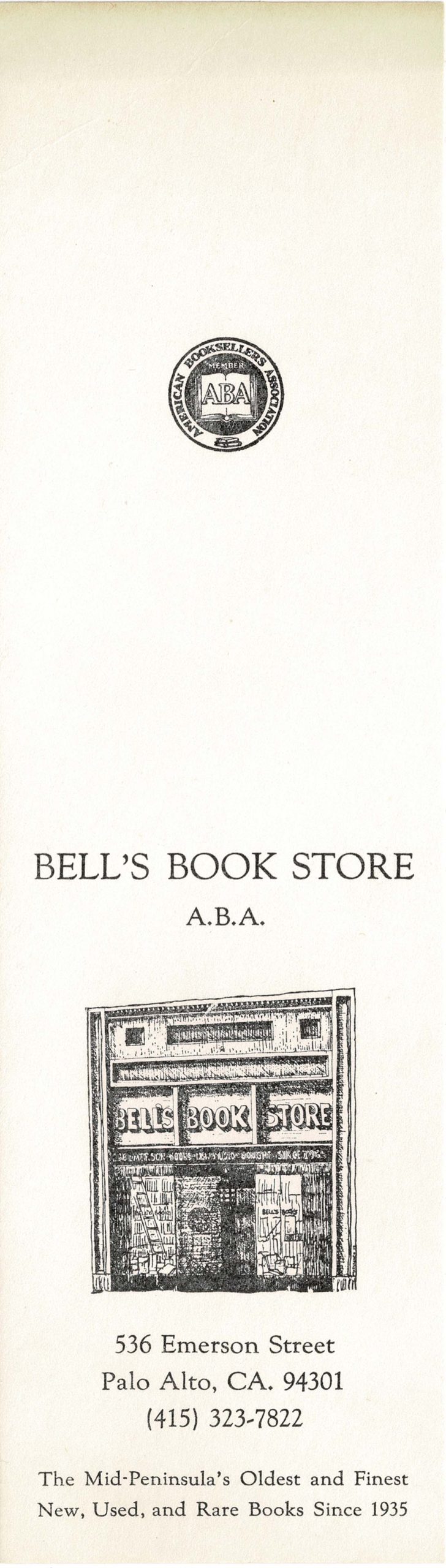
 I bought my first copy, the four-volume series, printed in 1920 at Bell’s Books next to Stanford University in Palo Alto, in the late 1960s. It still rests on my shelf today with the original
bookmark
that came with it. To avoid handling that century-old antique I have three more recent editions, which I refer to frequently – one in my office, one in our travel trailer, and one in the barn for summer afternoon reading with a cocktain in the meadow.
I bought my first copy, the four-volume series, printed in 1920 at Bell’s Books next to Stanford University in Palo Alto, in the late 1960s. It still rests on my shelf today with the original
bookmark
that came with it. To avoid handling that century-old antique I have three more recent editions, which I refer to frequently – one in my office, one in our travel trailer, and one in the barn for summer afternoon reading with a cocktain in the meadow.
The book has been out of print for decades but I recently found a used hardcover copy on Amazon, which I gave to my granddaughter, Lauren, who is now a diplomat in Washington, on her 24th Birthday. I hope it serves her as well as it has me.
By: Jim
Written: December 2021
Published: December 2021
Revised:
Reader feedback always appreciated
footnotes
| ↑i | It is impossible to find the middle of a string without first finding both ends. |
|---|