The menu on the left lists some of the projects that I played major roles in over the years, but first, I should explain why I chose to become an engineer in the first place, or more accurately, “why my Dad chose for me to become an engineer”. Even though I had been fixing neighbors’ TV sets when I was 15 or 16 years old, I didn’t make the connection to engineering until some years later, finding myself working my way through Engineering school, in a radio/TV repair shop in Angola.
In high school, I had earned a scholarship to study physics at Kalamazoo College, where my older brother had attended, but Dad had other ideas. I recall him saying that if I wanted to be a high school teacher, physics would be a good choice, but if I wanted to earn good money, engineering was better. At the time, I didn’t know the difference – I thought an engineer was a guy with a blue striped hat who drove a train.
Dad was part-owner of Clifton Engineering Company, building natural gas infrastructure, plus overhead and underground electrical distribution, so I quickly narrowed the choices down to Mechanical or Electrical, and Electrical offered two options – Power[i].. as in generating it and distributing it to homes and businesses or Electronics[ii]Bardeen & Brattain had invented the transistor a mere decade earlier, and Noyce & Moore were standing on the threshold of a revolution that would turn the world upside down..
The Electronics option sounded more appealing, and so the die was cast, I would become an Electronics Engineer.
Neither the Chemical Engineering (analyzing wastewater?) nor Civil Engineering (mixing concrete?) sounded very appealing, but in hindsight, it would not have mattered very much because after the chemistry, physics, algebra, plane geometry, solid geometry, trigonometry, calculus, and differential equations were finished, or the thermodynamics, structures, mechanisms, fluid dynamics, etc., would fall into place next to the magnetism, electric fields, circuit theory, computer science, and the rest of it. The underlying fundamentals were what mattered, and they were all the same.
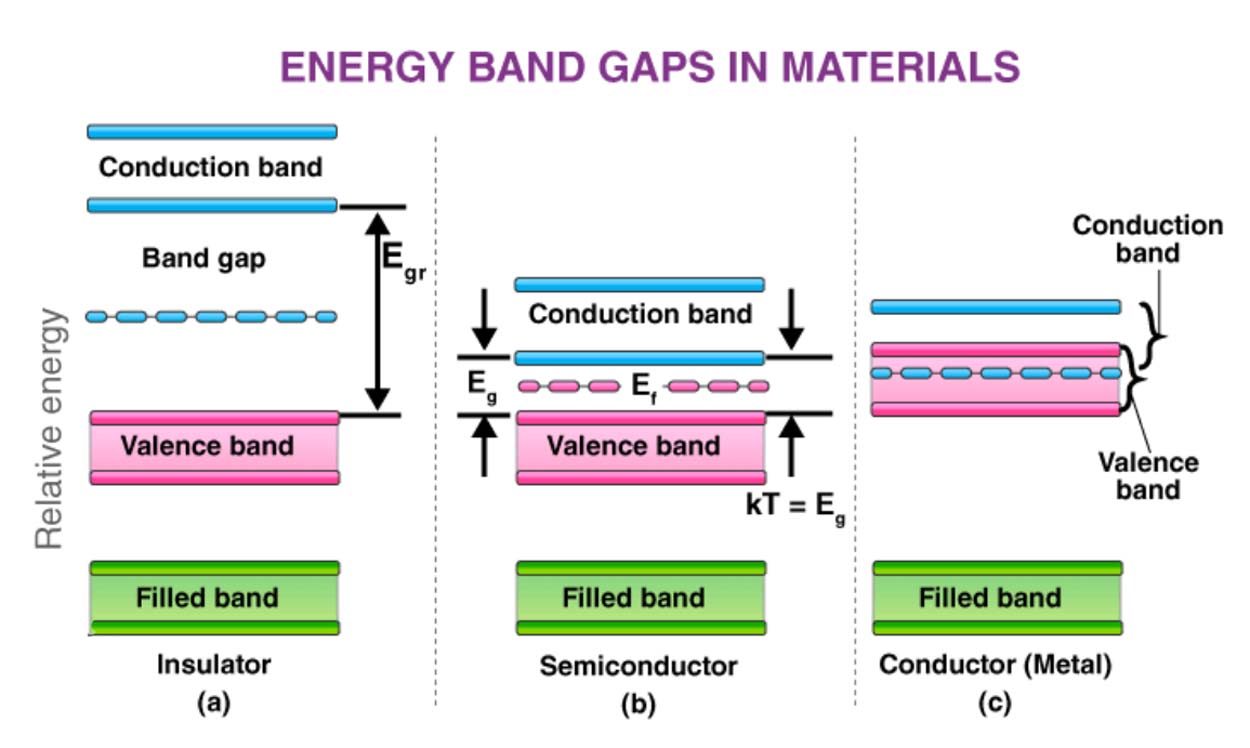
So I did it, and considering what I started with, I did it well. Despite the ups and downs of life, looking back, I attribute my ability to solve everyday problems to the basic understanding I acquired during those years of Engineering school. Without those, it would have been impossible to harken back to first principles, to solve difficult problems, whether electrical, mechanical, or just common-sense ones. In real life, while knowing how pumps, planets, elevators, or electrons work is not essential, it sure comes in handy. Finding myself equally comfortable discussing heat transfer in a crowded room, the starting current for a one-horsepower motor, or the intrinsic band gap of a Silicon junction are things I wish I had another chance to thank my Dad for.
So I did it, and considering what I started with, it seems like I did it well. Despite the ups and downs of life, looking back, I attribute my ability to solve everyday problems to the basic understanding I acquired during those years of Engineering school. Without those, it would have been impossible to harken back to first principles, to solve difficult problems, whether electrical, mechanical, or just common-sense ones.
In real life, knowing how pumps, elevators, electrons, and planets work is not essential, but it sure comes in handy. Finding myself equally comfortable discussing convective heat transfers around in a crowded room, estimating the starting current for a fractional-horsepower motor, or explaining the intrinsic band gap of a Silicon junction are things that make me wish Dad were here so I could thank him.
By: Jim Written: March 9, 2024 Published: March 9, 2024 Revised: February 16, 2026
Bardeen & Brattain had invented the transistor a mere decade earlier, and Noyce & Moore were standing on the threshold of a revolution that would turn the world upside down.
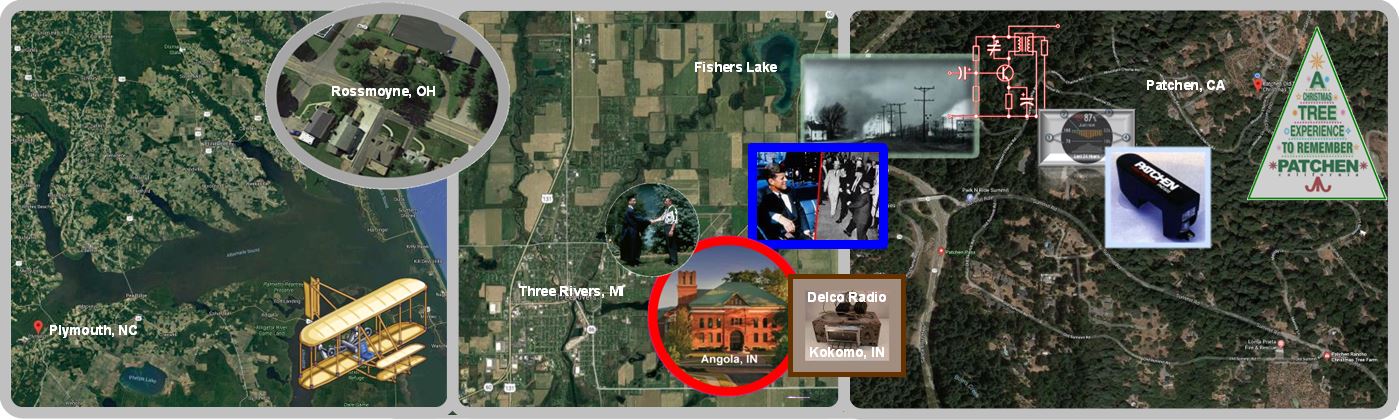
 The menu on the left lists some of the projects that I played major roles in over the years, but first, I should explain why I chose to become an engineer in the first place, or more accurately, “why my Dad chose for me to become an engineer”. Even though I had been fixing neighbors’ TV sets when I was 15 or 16 years old, I didn’t make the connection to engineering until some years later, finding myself working my way through Engineering school, in a radio/TV repair shop in Angola.