Know-Don’t-Know
After many decades in the business world, it’s not surprising that I would have some ideas about people management. My conclusion is that almost everyone wants to do well, and the job of managing is solely about enabling those people to perform their best.
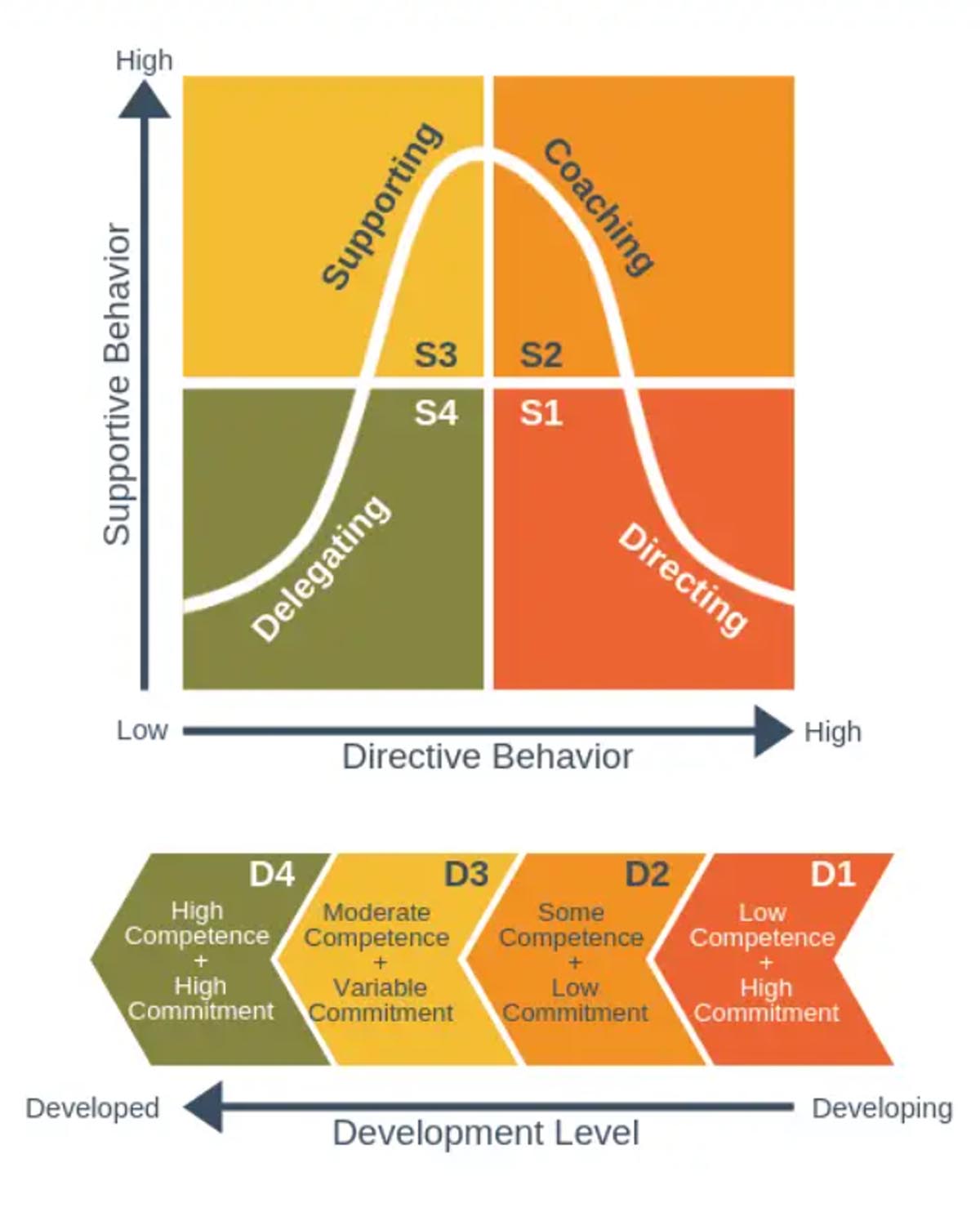 There is a wonderful book written more than a half-century ago called Management of Organizational Behavior[i]Not to be confused with some of his later works, which are probably equally good. by Paul Hersey, in which he discusses the use of what he called at the time “TASK”[ii]TASK = detailed directions on the definition of the job, and instructions regarding how to go about accomplishing it. and “RELATIONSHIP”[iii]RELATIONSHIP = showing confidence in, and encouragement of the subordinate, on a personal level. across a continuum of “MATURITY”[iv]MATURITY = the person’s innate abilities and skills needed to accomplish the task at hand. as a management style. In his later works, he referred to TASK as “Directive Behavior” and RELATIONSHIP as “Supportive Behavior”, as shown in the chart on the right. I borrowed his theory and gradually evolved into what I think is an easier way to recognize what each individual needs to be successful. That need depends not only on the individual’s “Knowledge” from his or her experience and training, but also on their “Awareness” of it. In other words, it is important to have appropriate motivation and skills, but to be aware of the limitations of those things.
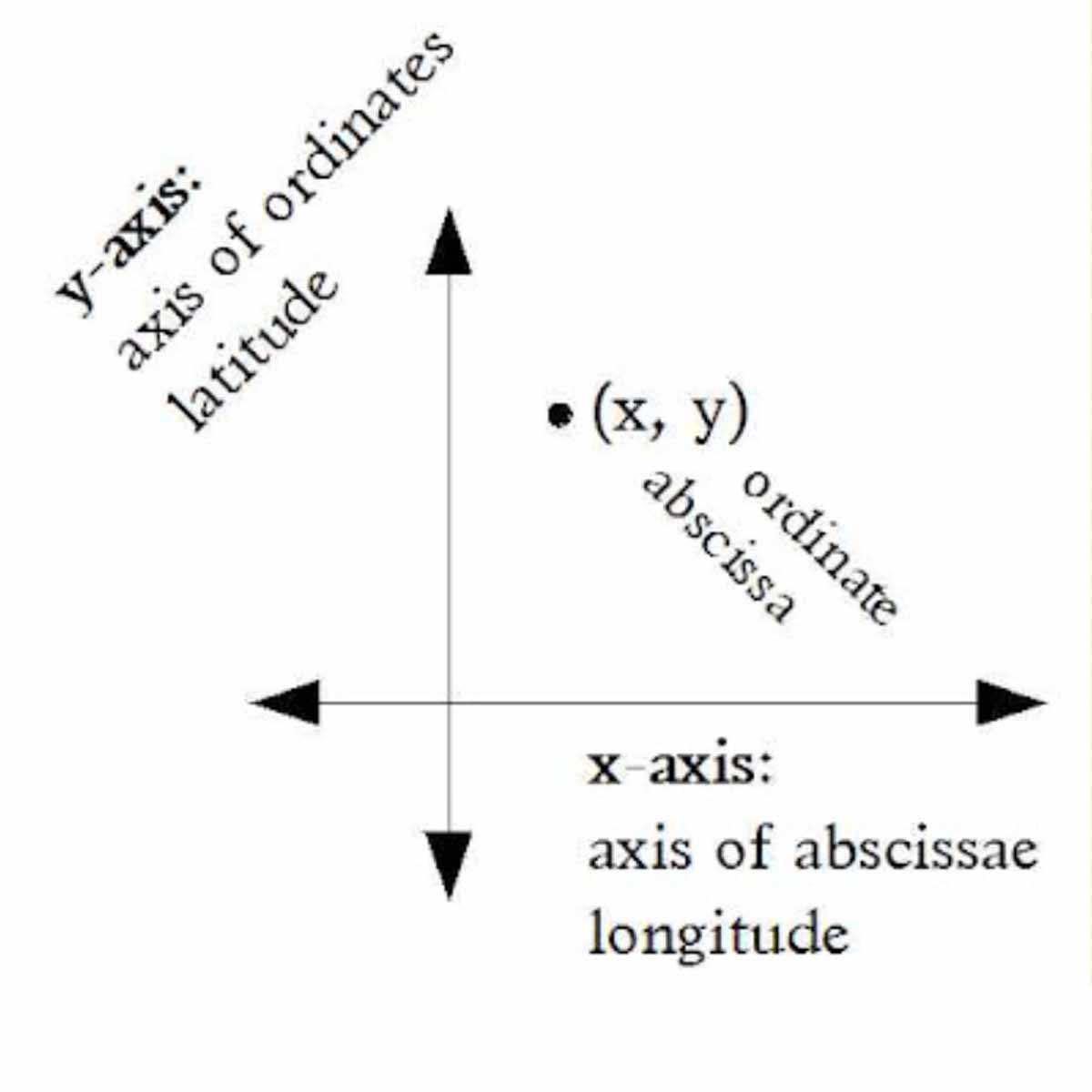
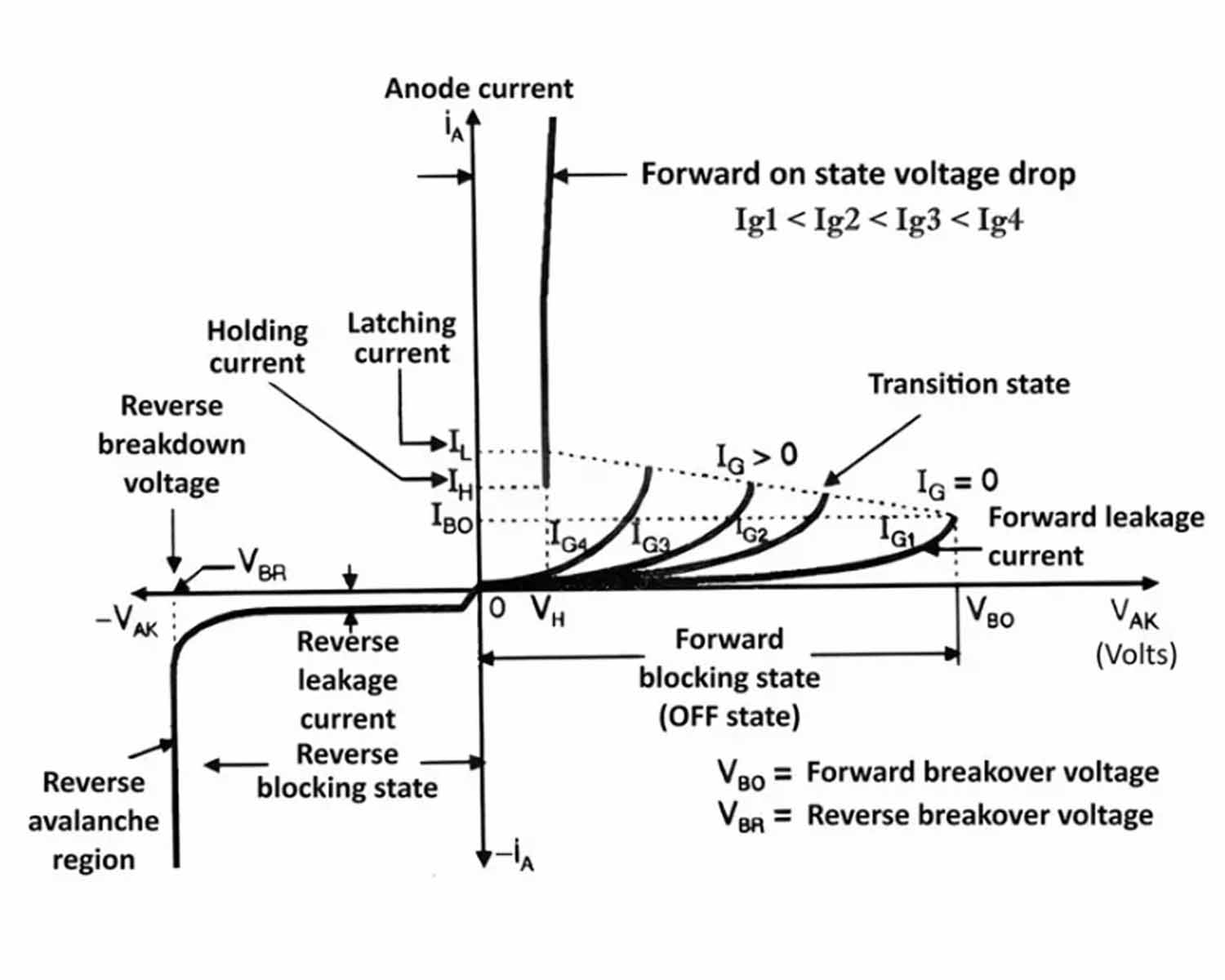
I reduced Hersey’s idea to the following simple matrix of four quadrants[v]If this were an electrical device, we would display its parameters using classic Cartesian Co-ordinates, with voltage on the abscissa and current on the ordinate, like this SCR family of curves. However, I will renumber them so as to make them easier to remember., where my objective was to invest my time where it is most productive. Those individuals falling within three of the four quadrants are potentially very productive, leaving the remaining one quadrant to absorb all of your time.
⇐ There are those who; ⇒
Q1
Know &
Know They Know
They are a pleasure to work with and will account for the vast majority of the progress.
- They;
- need no TASK
- need no RELATIONSHIP
- They are amazed by all the things the World is yet to discover.

- Carefully explain the goal to them
- Give them the tools they need
… and get out of their way.
Q3
Know &
Don’t Know They Know
With the proper guidance, they become superstars.
- They;
- need short-term TASK for reassurance,
- need RELATIONSHIP to build self-confidence.
- Watch them carefully;
- the “don’t know, they don’t know” can creep back in over time.
Q2
Don’t Know &
Know They Don’t Know
Good managers welcome them because they are eager to learn.
- They;
- need TASK at first,
- often need RELATIONSHIP to bolster self-confidence.
- With time, they can eventually become the most productive of all.
- Give them the TASK they need, but watch closely and back off when it is no longer needed.
- The RELATIONSHIP might be needed for a longer time, so listen carefully to them.
Q4
Don’t Know &
Don’t Know They Don’t Know
They will consume most of your time and never become productive.
- They;
- need TASK, but don’t follow it,
- don’t benefit from RELATIONSHIP because they already know everything,
- are more likely to be amazed by things the World already knows rather than the undiscovered,
- often distract others from their work.
- Confront them directly and firmly.
- If they respond, encourage them.
- If they fail to respond, remove them quickly.
My little matrix served me well for many years, but I eventually realized there was a fifth category of individuals who didn’t fit the matrix. I call it Cat5 because there cannot be more than four positions in a quadrant.
There are those who;
Cat5
Don’t Know &
Know They Don’t Know &
Don’t Want To Know
They often have many of the characteristics of the Don’t Know & Don’t Know category but seem to be unable to cope with the realization of not knowing very much. They don’t respond to the prescribed remedy, and it is difficult to tell whether
- they;
- are too proud to accept the help offered to them,
- have some delusion about learning not being critical,
- suffer from an irrational feeling of entitlement.
- Whatever it is, it usually becomes necessary to remove them, as they cannot be helped.
<p style=”margin-top: 10px;”</p>
The questions remain as to how to decide which quadrant is appropriate for each individual when hiring new people, and how to account for an individual’s progress over time. It is common that people who excel in one functional category are moved to another, expecting that they will do well in a different role, but that often doesn’t work.
Please note before continuing that I am not a psychiatrist. I am also not a management training expert or human behavioral scientist – if there is such a thing. Furthermore, I have done absolutely no research that might validate any of these ideas, nor do I intend to do so in the future. Rather, I am a simple engineer with a lot of experience managing people, from teenagers to highly trained professionals from various parts of the World, and with various levels of experience.
The following are strictly my ideas, so proceed to Working Wisdom cautiously.
By: Jim
Written: circa 1995
Published: May 2020
Revised:
Reader feedback always appreciated
footnotes
| ↑i | Not to be confused with some of his later works, which are probably equally good. |
|---|---|
| ↑ii | TASK = detailed directions on the definition of the job, and instructions regarding how to go about accomplishing it. |
| ↑iii | RELATIONSHIP = showing confidence in, and encouragement of the subordinate, on a personal level. |
| ↑iv | MATURITY = the person’s innate abilities and skills needed to accomplish the task at hand. |
| ↑v | If this were an electrical device, we would display its parameters using classic Cartesian Co-ordinates, with voltage on the abscissa and current on the ordinate, like this SCR family of curves. However, I will renumber them so as to make them easier to remember. |