Shallow Thinking
an antidote for it
I never gave much thought to politics until late in life. As naive as it sounds, I even thought professional politicians should handle politics because they had the best information to make the best decisions – fast forward to Marjorie Taylor Greene, Maxine Waters, and the Squad.
Then one day I heard Plato say [i]That was around 300 BC, so I was just a little kid at the time., “one of the penalties for refusing to participate in politics is that you end up being governed by your inferiors”. Socrates, of course, had taken a very different view on that question, but I am going with Plato on this one.
By the 1970s, I was frustrated that I was not able to engage with friends[ii] John Ronald and Larry Stenger, as they debated the political questions of the day. But it took another couple of decades to gain the confidence to formulate opinions that I judged worthy of sharing. I began to notice, however, that a third (including both fringes) of voters did not show any signs of rational thought at all. I assumed that half the remaining 2/3 were able to think clearly enough to have valid opinions, and that the others might be persuaded with evidence, so I approached them that way. Those shallow thinkers, as I began to think of them, were likely influenced by family and friends with deep-rooted biases, while others were intellectually lazy or just dumb. Whatever their story, I started using Dr Dean Edell’s simple rule of first asking what evidence would sway their opinion, and if they answered NONE, I could politely excuse myself from the conversation.
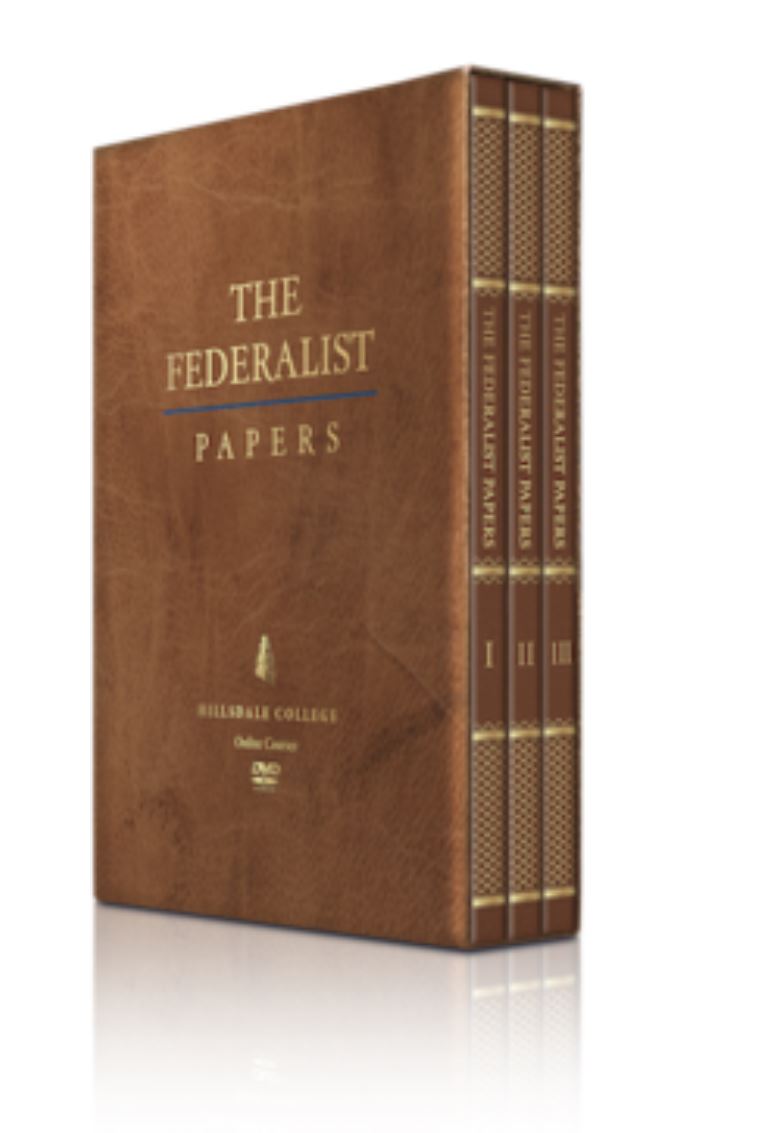
By the 1990s, with no formal training in political science, and not able to hold a lot of complicated information in my mind, I started collecting printed documents, like the U.S. Constitution, Federalist Papers , and other such things, which I kept above the visor in my truck. Later, I collected the documents in pdf format that could be quickly searched for keywords, without reading the entire document. Currently, I keep a long list on my phone and on Dropbox, including the following.
- U.S. Constitution
- All the Constitutional Amendments with tags to the Articles
- The Federalist Papers – also tagged by the subject matter
- Speeches by Martin Luther King, Kennedy, Reagan, et al
- References to Marx, Montesquieu, and others
- Al Gore on “inventing” the Internet & Trump on Charlottesville
- Infamous untruths like Reagan eliminating mental hospitals in 1972[iii]He had vetoed the bill earlier but found himself in the impossible situation of a veto-proof Democrat Congress.
- Contemporary items like the most recent antics of “ The Squad “
- The “Fake News” Russian conspiracy
Some are a bit bulky, like the Mueller Report at 448 pages and 137 MB. [iv]Acrobat was able to compress it to 72 MB, but most are easy to access, like the Constitution, at 19 pages at 381 KB, and the translation of the Magna Carta from the National Archives at 6 pages and 47 KB.
My understanding of any political situation is usually pretty shallow at first, but I have learned that opposing views are often much shallower, so now I am able to pull out my phone and get to the truth quickly – but that is not my antidote. It is only the last step in my three-step method. (click the + signs)
Step 1. Does it smell right? [weaver_showhide] ! In other words, if we take off our own hat of political biases, does it pass a simple, god-given-common-sense test?
[/weaver_showhide]
Step 2. Is the source credible? [weaver_showhide] ! Is the author a professional politician, a government employee, a political pundit, or an employee of a company affected by the subject matter?
[/weaver_showhide]
Step 3. Does the data support it? [weaver_showhide] ! Presenting the evidence as a last resort..
[/weaver_showhide]

CASE 1
A friend began exhausting a lot of hot air about the Georgia voting law revision, widely alleged to be a “white supremacist” move or worse.
Step 1. Does it smell right? [weaver_showhide] Answer. No, doesn’t sound like a wise move in this political climate.
[/weaver_showhide]
Step 2. Is the source credible? [weaver_showhide] Answer. No, it’s coming solely from the biased news media.
[/weaver_showhide]
Step 3. Does the data support it? [weaver_showhide] Answer. When I pulled out my old Pixel 3XL and went to the relevant document, [vi] I inquired of my friend, “which paragraph concerns you most”, the room suddenly fell totally silent.
[/weaver_showhide]
CASE 2
Recently, someone told me of her concern that Trump’s Big Beautiful Bill was going to result in 16 million people losing their health care insurance.
Step 1. Does it smell right? [weaver_showhide] Answer. No; it didn’t sound like a smart move with mid-term elections not far away.
[/weaver_showhide]
Step 2. Is the source credible? [weaver_showhide] Answer. No; since the second biggest liar in Washington had already increased the number to 17 million people overnight..
[/weaver_showhide]
Step 3. Does the data support it? [weaver_showhide] Answer. This was a pretty easy one because there is a word-for-word summary of the Bill online, spelling out all the details. There is even the original language, showing the edits, so there can be no mistaking what is there..
[/weaver_showhide]
other Cases to follow as time permits