
If It Ain’t Broke, Don’t Fix It[i]If it ain’t in the way, don’t throw it away.
Thinking of the myriad of ways that people of the world can be divided into groups – fat or skinny, rich or poor, black, white, or in between – one rather intriguing division comes from observing how they react when encountering things they don’t understand. Some condemn, criticise, and attempt to change what has gone before, while others stop to consider the potential for learning before proceeding. It is my casual observation that those in the criticizing/condemning/changing group are more often found in difficult situations, surrounded by crime, poverty, or general unhappiness, while those in the curious/questioning group are more likely to prosper throughout life. Not being trained in human psychology, I am unable to explain this phenomenon, but I have some thoughts.
As is often said about “beauty”, the definitions of the words “progress” and “intrinsic value” also lie in the eye of the beholder. For example, as the pioneers “progressed” across the Great Plains, the American Indians[ii]I avoid the term “Indigenous Americans” to avoid confusion about the meaning of those words. took a rather dim view of that “progress”. Had the newcomers stopped to consider that those people, having lived there for a few thousand years, probably could offer some valuable perspectives. Before Napoleon took off on his trek to Russia, he would have been wise to rethink his definition of “progressif“.[iii]He was French after all. It goes without saying that Hirohito could have benefited greatly by reading up on the then most recent couple of hundred years of North American history. Software companies, in particular, seem unable to grasp the fact that “new and different” is not synonymous with “improved”[iv]Remember Skype?.
This is not a political discussion, but I intend to borrow a term from the political arena – “Progressive”, or more appropriately “Psudo-Progressive” – and to expand its definition to include a philosophical look at how we think about, not just government, but also business and problem-solving in general.
 A small lighthouse on the beach at Puerto Morelos, Yucatan leans seriously to one side. Should they fix it?
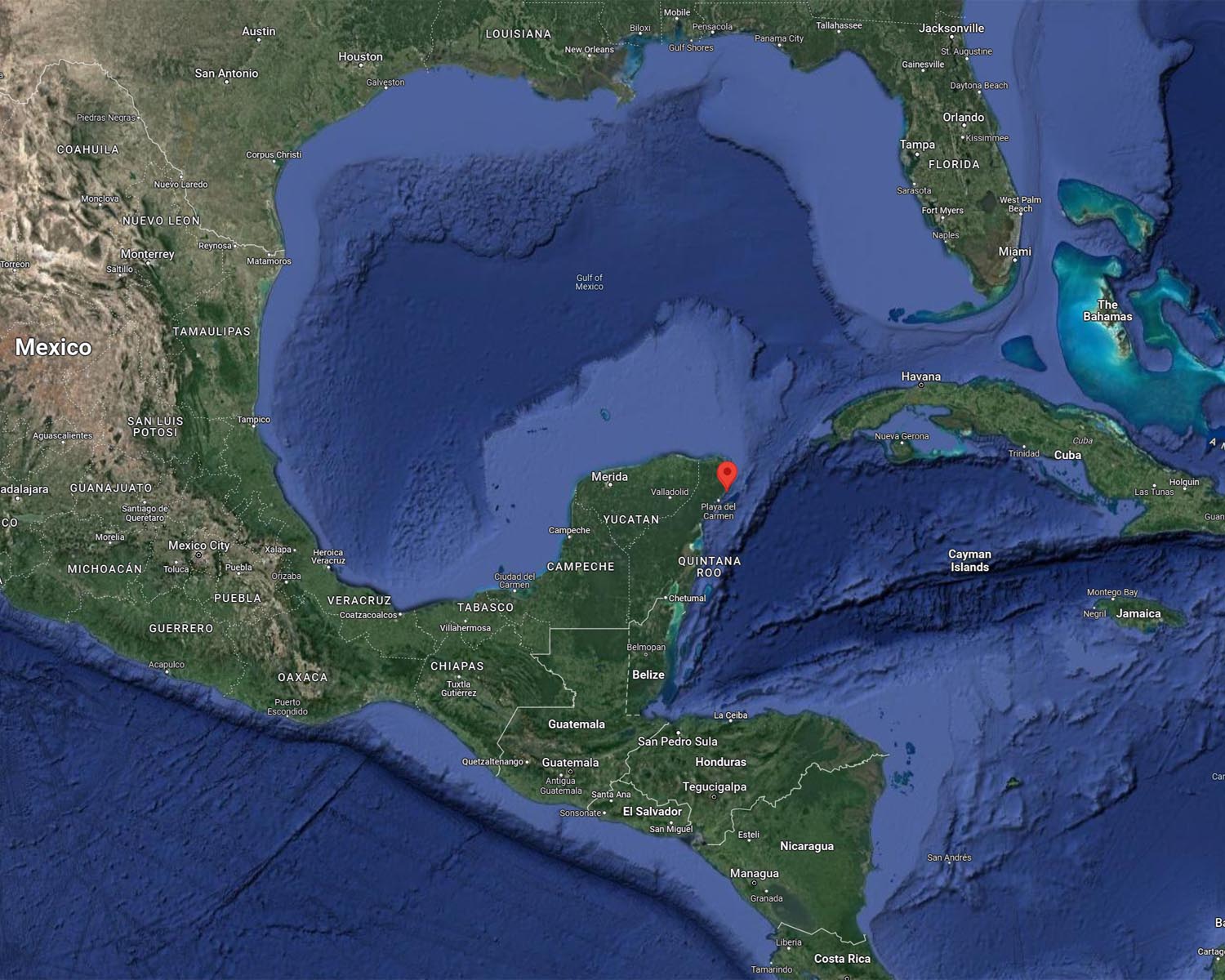
A contemplative[v]aka, “considered” – some might say “conservative”, if not politically, at least in thought approach to understanding it would be finding out how it got to be in that condition and what unintended consequences of trying to “fix it” might bring about. Is it tipping over due to poor construction? Is it a victim of old age and earthquakes, or did they just build it that way to attract tourists? The answer might be surprising and could be worthwhile to consider[vi]Reader investigation is optional. – further, notwithstanding that the hard work that went into it might be of little consequence, there is always a chance that some latent wisdom also went into it, so preserving or conserving that might be worthy of some consideration. Such ideas bring up that awful “C” word again[vii]yikes; did he mean CONSERVATIVE?, dragging us away from the narrow Oxford definition to the broader ones offered by Cambridge and Webster.
-
- Conservative (definition)
- relating to traditional norms of taste, elegance, style, or manners
cautious or discreet - favoring existing conditions and institutions or restoring traditional ones
- tending to emphasize the importance of preserving traditional cultural and religious values and to oppose sudden change
- tending to emphasize the importance of personal responsibility
- relating to traditional norms of taste, elegance, style, or manners
- Conservative (definition)
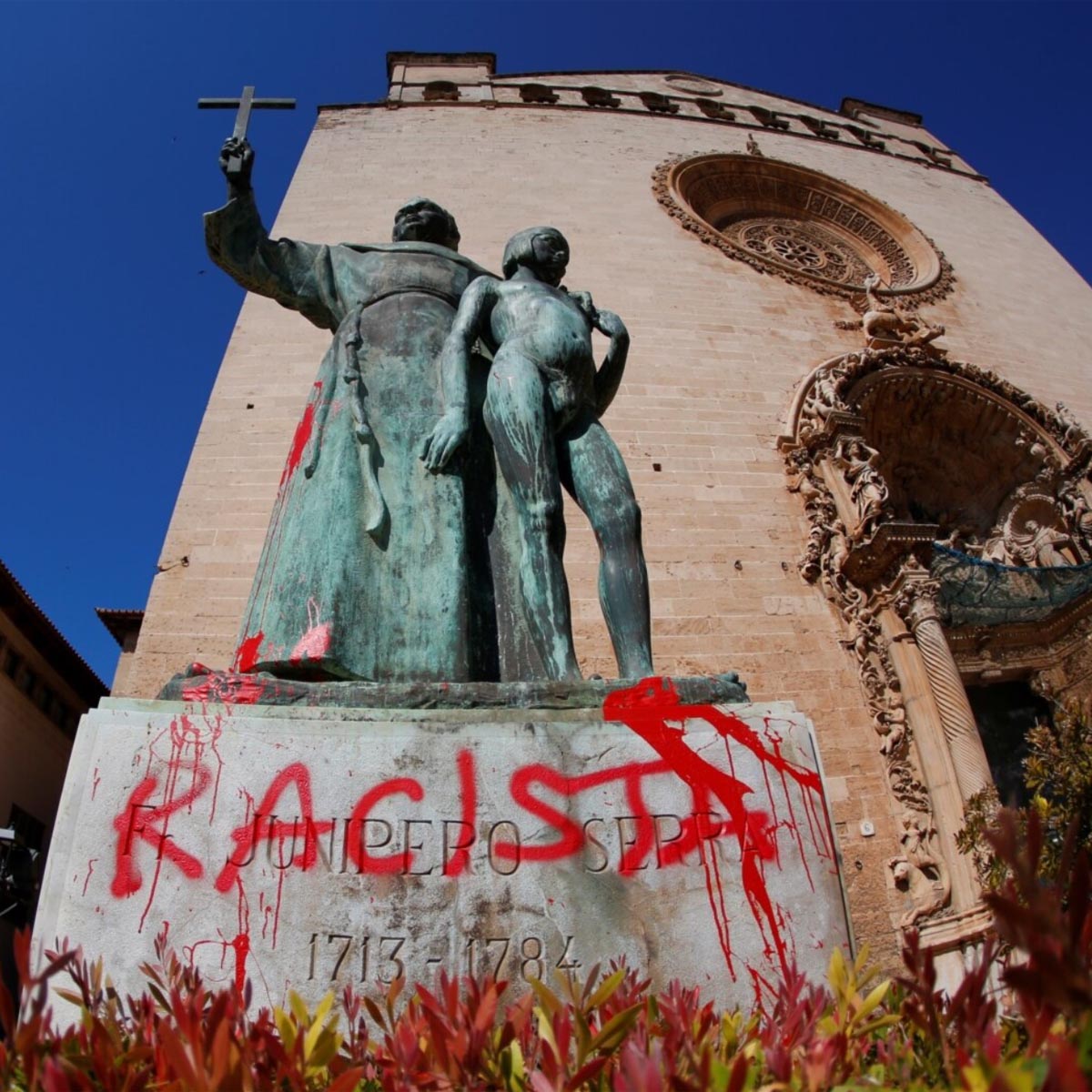
Conversely, a well-intentioned, shallow-thinking, Pseudo-progressive person might well say, “Hell Yes, let’s get on with it”, and demolish a couple of nearby statues at the same time, to avoid one’s fragile, sophisticated worldview from being “triggered by” the image of those evil men. In real life, of course, questions don’t have such simple answers, suggesting some forethought would be in order when we encounter things we don’t understand, and thus the following familiar theorem –
If It Ain’t Broke, Don’t Fix It
Like all good theorems, it has corollaries – three for now, with others to follow.
- Iignoring history of course leads to repeating the same mistakes, and works of art, such as a statue of a Civil War General on his mount with sword raised high, or a mural recounting Junipero Serra looking down upon an American Indian, or a photograph of a President we might not have agreed with. Those images stay in our minds to remind us of the good and the not-so-good moments in history. The special word we use to describe those who would take those images away is – DUMB.
- We often come across ideas or objects that we don’t appreciate or understand, things like software programs, art pieces, or a wide range of things that people invest time and effort in. Those who condemn or attempt to deface those things are described politely as – INCONSIDERATE.
- We always have the option to accept that with which we don’t agree or understand, which is called THOUGHTFUL, opening the possibility of CONSERVATIVE.
By: Jim
Written: December 25, 2023
Published: December 26, 2023
Revised: March 10, 2025
footnotes
| ↑i | If it ain’t in the way, don’t throw it away. |
|---|---|
| ↑ii | I avoid the term “Indigenous Americans” to avoid confusion about the meaning of those words. |
| ↑iii | He was French after all. |
| ↑iv | Remember Skype? |
| ↑v | aka, “considered” – some might say “conservative”, if not politically, at least in thought |
| ↑vi | Reader investigation is optional. |
| ↑vii | yikes; did he mean CONSERVATIVE? |